

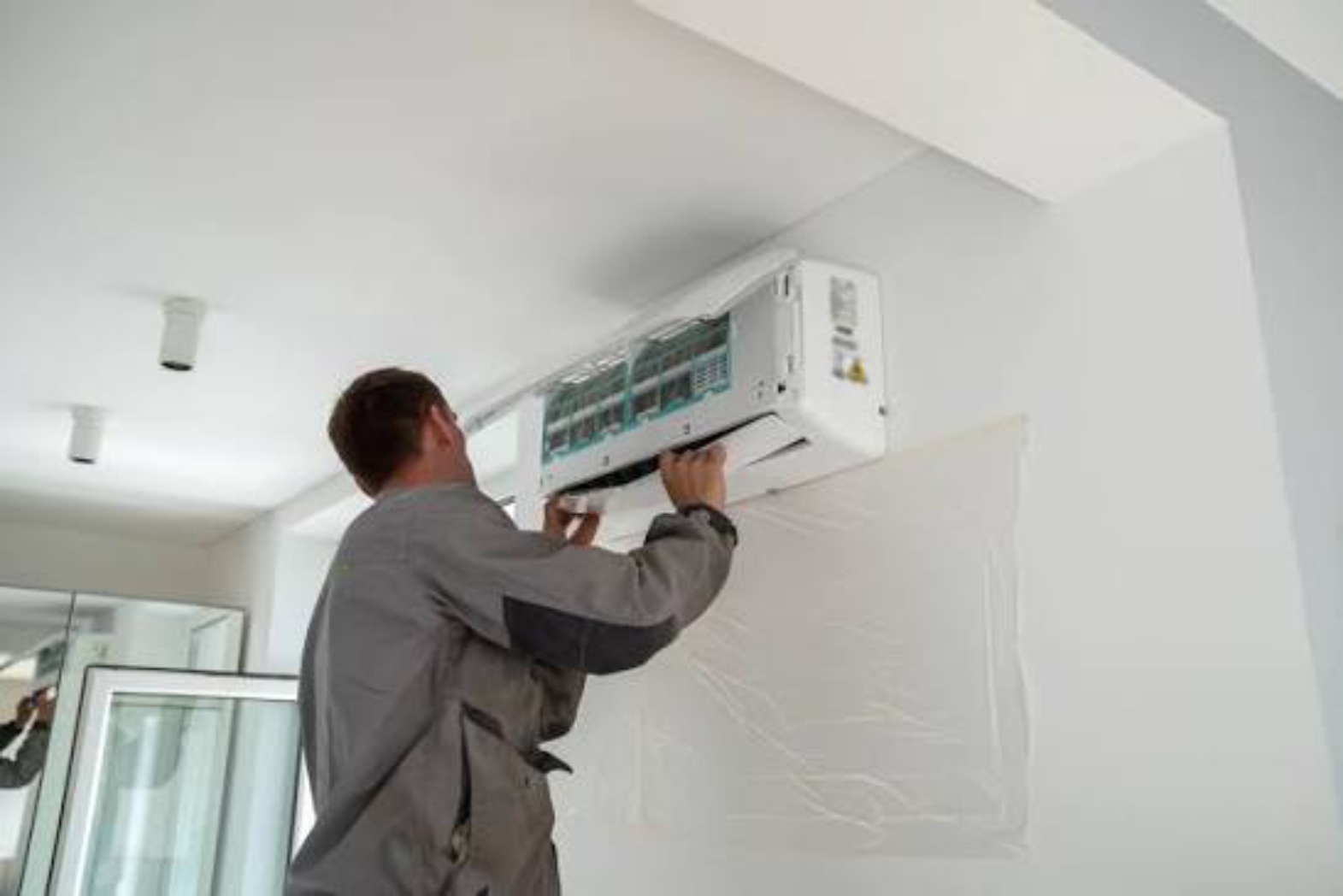
Best Way to Finance a New HVAC System: 4 Options to Consider Before You Sign
Replacing an HVAC system is one of those expenses most homeowners would rather not think about until they have no choice. One day the air conditioner is making a strange noise; the next, a technician is standing in your home explaining that the system has reached the end of its useful life.
And then comes the uncomfortable question: How are you going to pay for it?
A new HVAC system can cost thousands of dollars, depending on the equipment, installation, size of the home and complexity of the job. For many households, paying the entire amount in cash is not realistic. Financing can make the purchase manageable, but choosing the wrong financing option can turn an already expensive replacement into a much bigger bill.
So, what is the best way to finance a new HVAC system?
There isn’t one answer that works for everyone. The right choice depends on your credit, available savings, how quickly you need the replacement and, most importantly, the total cost of borrowing.
What Is the Best Way to Finance a New HVAC System?
For many homeowners, the best starting point is to compare HVAC company financing, a personal loan, a home equity loan or HELOC, and a low-interest promotional credit option.
Dealer financing can be convenient because the financing and installation are handled together. A personal loan can give you more freedom to compare contractors separately from your lender. Home equity financing may provide a lower interest rate, but your home becomes collateral. A promotional financing offer can be attractive if you qualify and can repay the balance before the promotional period ends.
The mistake is assuming that the option with the smallest monthly payment is automatically the cheapest.
A $12,000 HVAC system financed over seven years may produce a comfortable monthly payment, but you could end up paying substantially more in interest than you would with a shorter loan.
Before agreeing to anything, look at the APR, total repayment amount, loan term, fees and what happens when a promotional rate expires.
1. HVAC Company Financing
The easiest option may be financing directly through the HVAC contractor.
Many HVAC companies work with banks or specialised financing providers. You apply during the purchasing process, and if approved, the financing can cover some or all of the equipment and installation costs. Carrier, for example, notes that HVAC financing can typically cover both equipment and professional installation, although the specific terms depend on the independent lender and dealer.
The biggest advantage is convenience. You don’t have to arrange a separate loan and then coordinate payment with the contractor.
But convenience should not stop you from shopping around.
Ask the contractor:
- What is the APR?
- Is there an introductory 0% or reduced-interest period?
- How long is the repayment term?
- Is there a down payment?
- Are there application or origination fees?
- What happens if you still have a balance when the promotional period ends?
- Is the quoted financing price different from the cash price?
A financing offer can look excellent on the surface while becoming expensive later if the promotional terms are misunderstood.
2. A Personal Loan
A personal loan is another option worth comparing, particularly if you want to choose your HVAC contractor independently.
You borrow the amount you need from a bank, credit union or online lender and repay it in fixed monthly instalments. Depending on the lender, you may be able to borrow enough to cover both the HVAC equipment and installation.
One advantage is that you can compare the personal-loan APR against the contractor’s financing offer before making a decision.
Personal loans are also generally unsecured, meaning you aren’t putting your home up as collateral. However, the interest rate you receive can vary considerably based on your credit profile and other factors.
Current personal-loan rates can also be significantly higher than promotional HVAC financing offers, so don’t assume a personal loan is automatically cheaper.
3. Home Equity Loan or HELOC
If you have substantial equity in your home, you may consider borrowing against it.
A home equity loan typically gives you a lump sum and fixed repayment schedule. A HELOC, or home equity line of credit, works more like a revolving line of credit, allowing you to borrow as needed within an approved limit.
These options can offer longer repayment periods and potentially lower interest rates than some unsecured borrowing.
There is an important trade-off, however: your home secures the debt.
If you cannot make the payments, you could put your home at risk. That makes home equity financing something to consider carefully rather than simply choosing because the interest rate looks attractive.
For a relatively modest HVAC replacement, taking on secured debt may not be worth the additional risk.
4. Promotional 0% Financing
A genuine 0% promotional offer can be one of the cheapest ways to finance an HVAC replacement if you qualify and can pay the balance within the promotional period.
Suppose you finance $12,000 at 0% for 60 months. Ignoring fees, paying exactly $200 per month would clear the balance in five years.
That sounds straightforward, but read the terms carefully.
Some promotional offers have strict conditions. You need to know whether the offer is truly 0% APR, whether interest can accrue during the promotional period, and what interest rate applies to any remaining balance afterwards.
For example, American Standard currently describes a financing programme offering 0% APR for 60 months with equal payments through participating dealers, while also warning that unpaid balances after the promotional period can become subject to a much higher APR.
The lesson is simple: don’t choose a financing offer because the advertisement says “0%.” Read the entire agreement.
What Is the $5,000 Rule for HVAC?
The $5,000 rule for HVAC is actually not a financing rule. It is a rule of thumb that helps homeowners decide whether repairing an old system is worth the money or whether replacement deserves consideration.
The calculation is:
Age of HVAC system × cost of repair = decision number
For example, imagine your air conditioner is 12 years old and a major repair will cost $600.
12 × $600 = $7,200.
Because $7,200 is above $5,000, the rule suggests that replacement may make more financial sense than putting another $600 into an ageing system.
If the same 12-year-old system needed a $300 repair:
12 × $300 = $3,600.
In that case, repairing it may still be reasonable.
But don’t treat the $5,000 rule as a law. It isn’t an industry requirement or a guarantee. It is simply a quick way to frame the decision. The system’s condition, efficiency, repair history, refrigerant, expected remaining lifespan and the cost of a replacement should also be considered.
This distinction matters when you’re thinking about financing. There is little point financing a brand-new system if a relatively inexpensive repair could reasonably keep your current one running for several more years.
How Can You Save Money on HVAC?
The best way to save money on HVAC is not necessarily to find the lowest monthly payment. It is to reduce the amount you need to finance in the first place.
Start by getting more than one replacement quote. HVAC installation prices can vary, and the cheapest quote is not necessarily the best one. Look at the equipment, efficiency rating, warranty, installation work and reputation of the contractor alongside the price.
Then ask about available rebates, utility incentives and manufacturer promotions. Depending on where you live and the equipment you choose, energy-efficiency incentives may reduce your out-of-pocket cost. Some manufacturers and local utilities offer incentives for qualifying equipment.
You can also make a partial down payment if doing so does not leave you without an adequate emergency fund.
For example, if a replacement costs $12,000 and you can comfortably put $2,000 towards it, you’re financing $10,000 instead of $12,000. That reduces both your monthly payment and, depending on the loan, the amount of interest you pay.
Another overlooked way to save is to maintain the system properly after installation. A well-maintained HVAC system is less likely to become a source of repeated repair bills, although maintenance cannot eliminate normal wear and eventual replacement.
What Credit Score Do You Need for HVAC Financing?
There is no single credit score required for HVAC financing.
The lender determines its own approval criteria, and requirements can vary depending on the financing product. Some personal-loan lenders may accept borrowers with fair credit, while the most attractive promotional financing offers may require stronger credit.
SoFi notes that some personal loans may be available to borrowers with credit scores around 580, while many lenders prefer scores of 620 or higher.
Don’t focus only on the minimum score, though.
Two people with similar credit scores can receive different offers because lenders may also consider income, existing debt, employment and other factors.
If your credit isn’t strong enough for the best rate, consider whether you can wait and improve your credit before replacing the system, provided your existing HVAC system is still functioning safely.
If the replacement is urgent, compare several financing options rather than accepting the first approval you receive.
Can You Do a Payment Plan on an AC Unit?
Yes. Many homeowners can pay for an AC unit through a monthly payment plan rather than paying the full cost upfront.
The payment plan may come from the HVAC company, a third-party financing provider, a personal loan or another credit product. Some HVAC dealers advertise promotional financing, while others offer standard monthly-payment loans.
The important question is not simply, “Can I afford the monthly payment?”
Ask instead:
“How much will this AC ultimately cost me after all payments and interest?”
Imagine two offers for a $10,000 replacement:
- Offer A: $250 per month for 48 months
- Offer B: $170 per month for 72 months
Offer B looks easier on your monthly budget, but the longer repayment period could mean paying considerably more overall once interest is included.
A lower monthly payment is useful when cash flow is tight, but it isn’t necessarily a better deal.
Should You Pay Cash or Finance a New HVAC System?
If you have enough savings to pay for the system outright, the decision becomes more nuanced.
Paying cash avoids interest, but draining your savings completely can leave you vulnerable if another major expense appears shortly afterwards.
For example, spending your entire emergency fund on an HVAC replacement may not be wise if it leaves you with nothing available for a medical bill, car repair, job loss or another unexpected expense.
On the other hand, borrowing thousands of dollars simply to keep a large amount of cash sitting in a low-interest account may also be expensive.
A reasonable middle ground can be to make a partial payment and finance the remainder, provided the financing terms are favourable and you still maintain an appropriate cash reserve.
How to Choose the Right HVAC Financing Option
Before signing a contract, put the offers side by side.
Look at these five numbers:
1. Amount financed: How much are you actually borrowing?
2. APR: What is the annual cost of the borrowing?
3. Monthly payment: Can you comfortably afford it without relying on credit cards or missing other bills?
4. Loan term: How many months or years will you be making payments?
5. Total repayment: How much will leave your pocket by the time the debt is completely paid?
That last number is often the most revealing.
A financing plan with a slightly higher monthly payment can be the better choice if it gets you out of debt sooner and saves hundreds or thousands of dollars in interest.
The Bottom Line
The best way to finance a new HVAC system is the option that gives you a manageable payment without unnecessarily increasing the total cost of the replacement.
Start by determining whether you actually need a replacement. If you’re dealing with a repair, the $5,000 rule can give you a quick starting point, but don’t let one formula make the entire decision.
If replacement is necessary, get multiple quotes and compare dealer financing with personal loans and other options. Look beyond the monthly payment and pay close attention to APR, fees, promotional periods and total repayment.
And if you’re offered a payment plan for your AC, don’t be afraid to ask one simple question before signing:
“How much will I pay in total by the time this is completely paid off?”
That number can tell you far more about whether you’ve found a good deal than the monthly payment ever will.